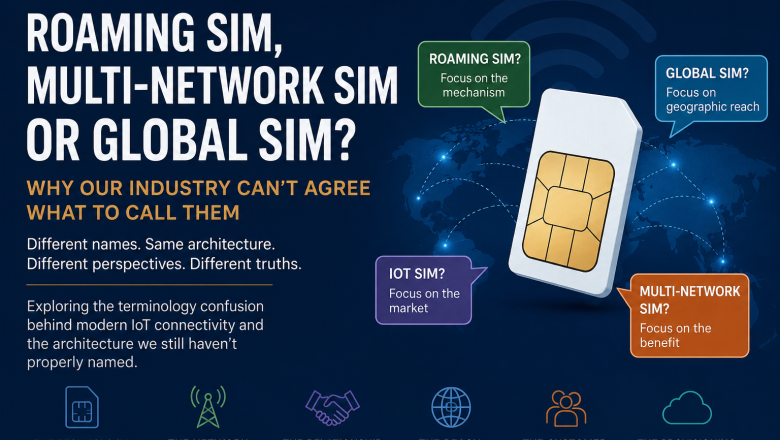
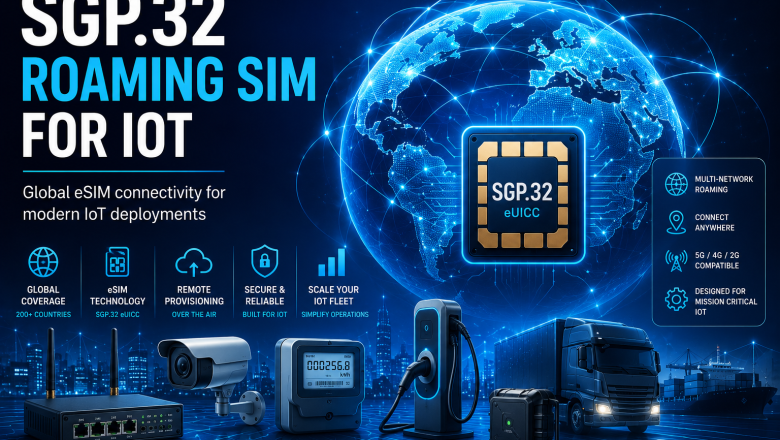
As IoT deployments grow globally, the old rigidity of physical SIM cards and fixed-IP roaming devices is increasingly mismatched to modern needs. Enterprises now demand flexibility—remote provisioning, carrier independence, and seamless global access. The emergence of roaming eSIM and new services like Iotinix are shifting the shift of control firmly into the hands of the customer.
The Traditional SIM Era: Limitations and Constraints
Plastic SIM Cards & Manual Roaming Plans
The legacy model relies on physical SIM cards—either supplied per-country or tied to one roaming contract. These require manual insertion, logistics of inventory, and early lock-in to specific carriers. As devices move across borders or usage patterns change, switching operators is slow, laborious, and expensive.
Fixed‑IP Roaming SIMs: Predictable but Inflexible
In M2M and enterprise use cases, fixed-IP SIMs (or static IP roaming SIMs) provided stable VPN access and simplified remote management. However, each SIM profile must be pre-provisioned—carriers must be negotiated beforehand and swapping to a new provider often means new SIM hardware or highly manual reconfiguration. Enterprises lose agility and encounter vendor lock‑in.
The Rise of eSIM & eUICC: Enabling Digital, Remote Control
From Plastic to Embedded
eSIM (or eUICC) represents a foundational shift: connectivity modules soldered into devices at manufacture, capable of securely storing multiple profiles. This shifts SIM management from physical cards to digital, remote provisioning, enabling a single SKU for global deployment and vastly smaller hardware footprint.
Roaming eSIM: The Next Frontier
Beyond embedded hardware, roaming eSIM allows devices to download profiles for different carriers dynamically—based on region, carrier quality, cost or compliance needs. Instead of relying on a pre-provisioned SIM or roaming back to a home network (often costly or restricted), devices can pivot to a locally optimal network via over-the-air profile ingestion.
Remote SIM Provisioning Meets Roaming eSIM
RSP and roaming eSIM together offer:
- Over-the-air activation and SIM switching, eliminating physical handling.
- Carrier portability: devices can move freely across carriers as policies change.
- Permanent roaming compliance: switching to local operator profiles where long term roaming is restricted.
- Zero‑touch deployment, with provisioning triggered by location, policy, or remote command.
This is a game-changer for roaming SIM management: control shifts from carrier-led provisioning to customer-defined connectivity orchestration.
Iotinix: Customer-Controlled Remote Access for 4G/5G Routers 🌐
One emerging service reshaping this landscape is Iotinix, offering secure remote access to 4G and 5G routers—decoupled from the connectivity provider. Key features include:
- Provider‑agnostic router access: A standardized remote access layer that works regardless of which eSIM or carrier is active.
- Flexibility to switch eSIM providers while retaining the same remote management platform.
- Secure tunnels over lPv6 or VPN to enterprise systems, maintaining consistent access even while the underlying SIM profiles change.
- Customer‑driven control: organizations choose which eSIM profile to deploy, switch profiles via API, and maintain service continuity without changing remote access configurations.
With Iotinix, the enterprise retains a single pane of glass for device access, while still leveraging the flexibility of roaming eSIM switching across providers.
Why the Shift to Customer-Centric Control Matters
Avoiding Carrier Lock-In
Fixed-IP SIMs often require pre-deals with connectivity providers. When conditions change (pricing, coverage, compliance), switching involves deploying new SIM hardware or reconfiguring fields. Roaming eSIM and platforms like Iotinix separate the remote access layer from the eSIM layer—enabling SIM swaps without disrupting remote access or VPN endpoints.
Cost Optimization
Rather than relying on home‑network roaming (often premium priced), enterprises can deploy local or global roaming eSIM profiles that adapt automatically to the best available operator in region. Combined with dynamic profile switching, this allows real‑time optimization of connectivity costs vs. performance.
Regulatory & Compliance Flexibility
Countries like India, Brazil, and Nigeria restrict prolonged roaming on foreign SIMs. Roaming eSIM lets devices switch to compliant, local operator profiles when deployed in those regions—and revert automatically when roaming restrictions change. Iotinix or similar platforms ensure device connectivity remains intact even during profile switches.
Simplified Logistics
A single embedded device SKU can be deployed globally, and profiles downloaded on demand. eSIM-enabled hardware eliminates multiple versions or stock‑keeping units. Remote access systems like Iotinix mean connectivity and management remain seamless, regardless of roaming provider.
Use Cases: Where Roaming eSIM + Iotinix Transform Operations
International Logistics & Asset Tracking
Devices on global shipments frequently cross borders. Roaming eSIM ensures they connect to regional carriers as they travel. Iotinix maintains secure remote access to gateways or routers in shipping containers regardless of SIM changes, enabling live diagnostics or configuration on demand.
Relocatable Routers
Pop‑up events, construction sites, or temporary infrastructure can deploy 4G/5G routers embedded with roaming eSIM. As SIM profiles change (e.g., different MNO coverage), Iotinix ensures uninterrupted access to those routers for monitoring, management, or remote VPN access.
Fleet Management
Vehicles crossing regions (urban to rural, crossing borders) benefit from switching to local network carriers to reduce cost and improve coverage. With roaming eSIM, they adapt dynamically. Iotinix ensures that fleet monitoring systems remain connected regardless of which eSIM profile is active.
Industrial & Smart City Infrastructure
Sensors, meters and environmental monitors in variable regions (e.g., across different municipal networks) can switch profiles automatically. Remote access by engineers via services like Iotinix remains constant even while SIM profiles update or rotate over years of operation.
How Businesses Should Approach Roaming eSIM & Remote Access Today
1. Transition from Fixed-IP SIM to Roaming eSIM‑Capable Hardware
Move away from devices tied to a single fixed SIM. Choose modules with eUICC support able to store multiple profiles and support over-the-air activation.
2. Deploy RSP-Compliant Connectivity
Partner with connectivity platforms that allow profile switching remotely, support carrier-neutral profiles, or offer global roaming eSIM management.
3. Separate Remote Access from Connectivity Layer
Implement remote access platforms like Iotinix that abstract device management away from SIM layer. This ensures the remote access endpoint remains unchanged even when SIM profiles change.
4. Automate Policy-Driven Provisioning
Use APIs to control which eSIM provider to activate based on rules: geography, cost, performance, compliance. Profiles can be switched automatically without device rework.
5. Maintain Centralised Access Control
Ensure remote access service, certificate chains, or VPN configurations remain consistent across connectivity changes—giving control to the enterprise.
The Customer-First Shift: Why This Is the Future
Empowering Enterprises
Control has moved from network operators controlling SIM activation to enterprises orchestrating both connectivity and remote access via APIs. Customers now define:
- When and where to switch carriers
- How to optimize costs and performance dynamically
- How to maintain remote access across changes—independently of the carrier
Faster Time to Market
A single global device SKU can be delivered and activated anywhere. Remote access tools remain consistent regardless of connectivity changes. New branches, regions, or services can be deployed in days rather than weeks.
Operational Resilience
When carriers raise prices, change policies, or new networks offer better performance, enterprises can switch with minimal disruption. Remote services remain active, devices stay reachable securely, and no technician visits are required.
Conclusion: Roaming eSIM + Remote Access = IoT Agility
The convergence of roaming eSIM, remote SIM provisioning, and platform‑agnostic access services like Iotinix is redefining how roaming SIM is managed:
- Plastic SIMs and fixed‑IP SIMs are becoming obsolete for modern IoT needs.
- Roaming eSIM provides dynamic, geopolitical-aware, cost-optimized connectivity.
- Remote access platforms decoupled from connectivity provider create true customer control.
Enterprises ready to embrace this architecture gain flexibility, resilience, and reduced total cost of ownership. In the world of roaming SIM, the future belongs to the customer—empowered, autonomous, and in full control of their global IoT operations.